
Flexcar
Flexcar, LLCAuto & Vehicles
3.6121.00 Reviews
- Version
- 4.0.108
- Installs
- 50.00K
- Age Rating
- Everyone
Screenshots
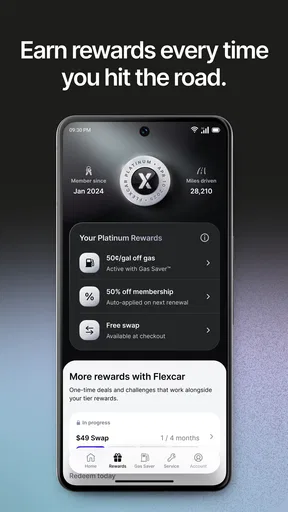
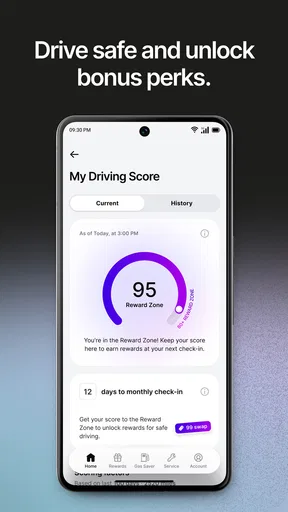
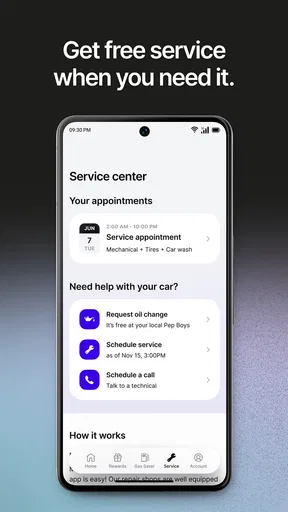

Our Review of Flexcar
 Analysis by Appyee
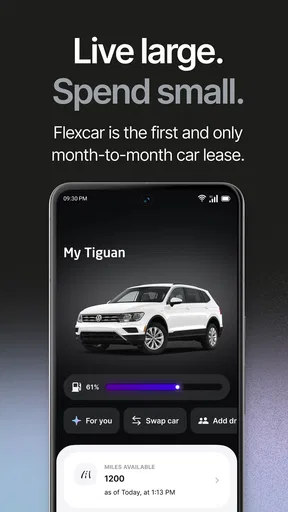
Flexcar is an Auto & Vehicles app from Flexcar, LLC that takes a different route from ordinary car ownership and traditional long-term leasing. Instead of treating a vehicle as a permanent commitment, it is built around the idea of a month-to-month lease. I found that approach appealing because it focuses on flexibility rather than making you plan several years ahead, especially if your transport needs may change.
The app itself is free, and it is rated for Everyone, so the basic barrier to trying it is low. Its Android listing shows a 3.6 average from more than five hundred ratings, with over fifty thousand installs. Those figures suggest a real user base, but also a mixed experience rather than universal satisfaction. My overall impression is that Flexcar makes the most sense when your need for a vehicle is genuine but temporary, and less sense when you already know exactly what car you want to keep for years.
How Flexcar fits into everyday driving
The central appeal is simple: I can think about having a car for the coming month without automatically treating that decision as a long-term financial commitment. That is useful for someone starting a new job, staying in a city temporarily, waiting for a personal vehicle to be repaired, or testing whether car ownership actually improves daily life.
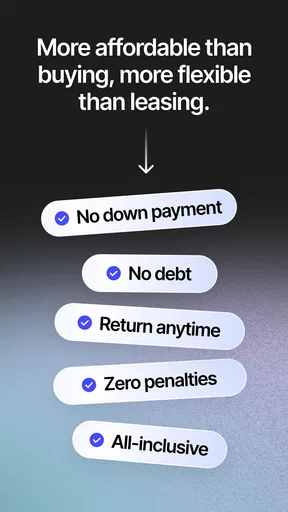
That flexibility changes the question you ask. With a normal purchase, I would compare loan terms, down payments, resale value, maintenance, insurance arrangements, and the length of time I expect to keep the vehicle. With a conventional lease, I would also worry about being tied to a contract and staying within its conditions. Flexcar is aimed at people who would rather make a shorter commitment, even if that convenience may come with trade-offs that a long-term arrangement avoids.
I would not describe the app as a replacement for every car-buying tool. It is better understood as a way to explore a month-to-month vehicle arrangement through a mobile experience. The app can be the convenient front door, but the real decision still depends on whether the available vehicle and terms fit your driving pattern. A polished app cannot make an unsuitable car affordable or turn occasional driving into good value.
For a realistic example, imagine moving to a new area for a temporary work assignment. Public transport may cover the commute, but grocery trips, appointments, and weekend travel are awkward without a car. Buying one could create a selling problem when the assignment ends, while a standard lease could outlast the stay. In that situation, Flexcar’s month-to-month concept is much easier to understand: use a car while the need exists, then reassess rather than assuming your current life will remain unchanged.
The app’s current position
Flexcar is listed as a free app and currently appears at version 4.0.108, with Android support starting at version 7.0. That matters for people using an older phone, since the minimum operating-system requirement is relatively accessible. The app was released on January 15, 2021, so it is not a brand-new experiment; it has had time to develop beyond an initial launch.
The developer, Flexcar, LLC, has kept the product focused on one recognizable purpose rather than turning it into a general vehicle marketplace. I like that clarity. When I open an app in this category, I want to understand quickly whether it can help me obtain transportation, not browse unrelated automotive content.
At the same time, the 3.6 average rating tells me to approach the experience with practical expectations. I would install it to investigate a specific need, not assume that the app alone guarantees a smooth transaction. Reviews at this level often indicate that the usefulness can depend heavily on location, vehicle availability, account details, and how well the service matches an individual situation.
What the newer version means in practice
The current version number shows that Flexcar has continued evolving since its original release. That is a positive sign for an app handling a process as important as arranging access to a vehicle. A current build is more likely to reflect ongoing maintenance than an abandoned product, and users should keep the app updated before beginning a serious search.
However, I would separate that evidence from assumptions about what changed internally. A version number proves continued iteration, but it does not by itself promise a particular feature, faster approval, broader inventory, or a better experience in every region. I would judge the present app by the screens and terms visible during my own search rather than by expecting a major transformation from the version label alone.
For existing users, the practical lesson is to revisit the app instead of relying on memory from an earlier session. Interface details, account steps, and the way vehicle information is presented may have been refined over time. Before making a decision, I would review the current vehicle details and the full commitment information again, even if I had used Flexcar previously.
That habit is especially important with a flexible service. The word “month-to-month” can sound as though every part of the arrangement is effortless, but flexibility in duration does not remove the need to understand eligibility, vehicle suitability, recurring obligations, or the process for ending the arrangement. I would treat the app as a place to examine those details carefully, not as a shortcut around them.
Who benefits most from the month-to-month idea
The strongest audience is someone whose transportation needs are changing. A student with an uncertain schedule, a temporary resident, a household between vehicles, or a worker whose commute may soon change could all find the shorter horizon useful. It can also suit someone who wants to experience a car-based routine before deciding whether buying is worthwhile.
I see another less obvious use: a household can use the concept as a bridge while deciding whether it truly needs a second car. Rather than purchasing immediately, the family can examine how often the additional vehicle is actually used. That does not automatically make the arrangement economical, but it can turn an emotional “we need another car” decision into a more realistic trial.
Flexcar may also help people who value the ability to reconsider. Traditional ownership rewards long-term use, while this model is more attractive when uncertainty itself has value. If I expect to move, change jobs, or reduce my driving soon, avoiding a lengthy commitment could be worth paying more than I would for a carefully chosen used vehicle.
On the other hand, I would skip it if I drive heavily every day and already have access to a reliable, inexpensive car. In that case, the convenience of flexibility may not compensate for the ongoing cost. I would also hesitate if I need a very specific body style, equipment package, or cargo setup. A month-to-month service is only useful when the available vehicle meets the actual job.
How I would use the app before committing
I would begin with the practical question, “What problem am I solving?” If the answer is a temporary gap, uncertain relocation, or a short evaluation period, the app deserves a closer look. If the answer is simply “I want the lowest possible cost for many years,” I would compare it directly with buying a dependable used car and with a conventional lease.
Next, I would inspect the vehicle as if I were planning a normal week, not an ideal weekend. Can it handle the commute, shopping, passengers, parking situation, and occasional longer trip? This is one of the most important trade-offs that a short summary cannot answer. A flexible term is not helpful if the vehicle forces compromises every day.
I would also write down the complete recurring obligation before proceeding. The headline concept is easy to remember, while smaller conditions are easier to overlook when I am eager to get a car. My personal rule would be to read every cost and requirement shown in the app, capture the important details for later comparison, and only then compare the total with ownership alternatives.
A useful workflow is to calculate the number of months I realistically expect to need the vehicle, then add a second scenario in which that period becomes longer. If the arrangement only looks attractive in the shortest scenario, I would be cautious. If my temporary need turns into a year or more, the balance between flexibility and total cost may change considerably.
I would also avoid making a decision while distracted or rushed. Vehicle arrangements affect daily mobility, and a quick tap through a mobile screen can feel less serious than signing paperwork in person. The app is convenient, but I would slow down at the points involving vehicle condition, recurring commitments, and ending the arrangement.
Where it differs from buying, renting, and ordinary leasing
Buying remains the clearer option for drivers who want ownership, long-term control, and the possibility of keeping a vehicle after it has been paid for. It can demand more money upfront and exposes the owner to depreciation and maintenance, but a person who drives consistently for years may prefer that structure. Flexcar’s advantage is not ownership; it is the ability to avoid assuming that long future.
A traditional lease can offer a newer vehicle and a predictable contract period, but it is generally designed around a longer commitment. That can work well when I know my plans and want a stable arrangement. Flexcar is more compelling when I do not know how long I will need the car. The trade-off is that flexibility may be less attractive to someone who values the lowest long-term cost over convenience.
Short-term rental services are another comparison. Renting is often associated with brief trips or occasional use, while a month-to-month lease is aimed at a continuing need. If I only need a car for a weekend, I would look at a rental instead. If I need daily access for an uncertain period, Flexcar’s model appears more relevant. The correct choice depends on duration, frequency, and how much continuity I need.
Car-sharing can be better for people who drive only a few times each month and live near shared vehicles. Flexcar becomes more interesting when I need a car available without planning each individual trip. That convenience has value, but I would not pay for continuous access if my actual driving pattern is occasional. Matching the product to usage is more important than choosing the most flexible-sounding option.
Limitations I would keep in mind
The biggest limitation is that the app cannot eliminate the uncertainty behind the service. A month-to-month arrangement sounds adaptable, but my experience would still depend on what vehicles are available and whether one suits my needs at the moment I search. Someone with strict requirements should be prepared for the possibility that the flexible option is not the right fit on a particular day.
The mixed rating is another reason to stay alert. I would not read it as proof that the app is poor, but I would take it as a reminder that convenience and reliability may not feel identical for every user. Before depending on it for a job, move, or medical routine, I would make sure I understand the process well enough to avoid a last-minute transportation problem.
There is also a psychological trap: shorter commitment can encourage impulse decisions. Because I am not imagining years of ownership, I may pay less attention to whether the vehicle is genuinely suitable or whether the recurring cost fits my budget. My best advice is to compare the arrangement against a realistic monthly transportation budget, not against the emotional discomfort of buying a car.
I would skip the app if I am seeking a simple vehicle purchase, a one-day rental, or a guaranteed long-term model choice. Those needs point toward different tools. Flexcar’s identity is strongest in the middle ground between occasional rental and permanent ownership, and outside that middle ground its advantages become less convincing.
Questions I would answer before downloading
Is the app free to install? Yes, Flexcar is available as a free app. That does not mean the vehicle arrangement itself should be treated as free; I would separate the cost of accessing the app from every financial obligation shown while evaluating a car.
Can someone with an older Android phone use it? The listed minimum is Android 7.0, so users on that version or newer meet the stated operating-system threshold. I would still keep the app current, particularly when using it for an important transport decision.
Is it suitable for a permanent car replacement? Sometimes it may be, but I would not assume that automatically. A driver who expects years of steady use should compare total cost and ownership benefits carefully. The app is most naturally suited to changing circumstances, not to someone who has already decided on a long, stable ownership period.
Should a first-time user trust the headline alone? No. I would use the headline to understand the model, then inspect the actual vehicle information and commitment details before making a choice. The month-to-month idea is the starting point of the evaluation, not the conclusion.
What should an existing user do after an update? I would reopen the current version, check the account and vehicle information, and reread the relevant terms before arranging another vehicle. Product evolution is useful, but it is still wise to verify the present workflow rather than assuming it behaves exactly as it did previously.
My recommendation after weighing the trade-offs
Flexcar is a focused solution for a real problem: needing a car without wanting to make a traditional long-term commitment. I like that it gives uncertain drivers a more appropriate starting point than forcing them immediately into ownership or a conventional lease. The free app and accessible Android requirement also make it easy to investigate without much technical friction.
My recommendation is strongest for temporary residents, people between vehicles, and drivers testing whether regular car access fits a changing routine. I would use it as a comparison tool and a practical option, while still checking the full financial and vehicle details with the same care I would apply to a purchase.
For long-term drivers, occasional renters, and people with very specific vehicle requirements, another option may be better. Flexcar’s value depends on the flexibility being worth the trade-off. The smartest way to use it is to treat month-to-month access as a tool for uncertainty, not as an automatic bargain.
With continued development visible in the current version, I would watch how the app handles the parts that matter most after the initial search: clarity of ongoing commitments, ease of managing an existing arrangement, and how confidently users can reassess their vehicle choice. Those details will determine whether Flexcar remains merely an interesting concept or becomes a genuinely dependable part of everyday transport.
In short, I would recommend installing Flexcar when your need for a car is real but your future plans are not settled. I would not recommend choosing it blindly. Used thoughtfully, it offers a useful middle path between renting, leasing, and buying; used casually, its flexibility may distract from the more important question of whether the vehicle and total commitment truly fit your life.
Verdict
Strengths of Flexcar
- Flexible access to cars without long-term ownership commitments.
- Useful for occasional drivers who need a vehicle on demand.
- App-based booking and vehicle access make rentals convenient.
- Can reduce costs related to maintenance, insurance, and depreciation.
- Suitable for comparing mobility options before choosing a car.
Limitations of Flexcar
- Availability may be limited depending on your city and vehicle demand.
- Additional fees can increase the final price beyond the advertised rate.
- Users may need to inspect and report vehicle damage before driving.
- Pickup and return rules can be restrictive in some locations.
- Not ideal for frequent drivers who need guaranteed daily access.
Similar Picks in This Category
View All
Android Auto
Google LLC4.1

maxim — order a taxi & food
PT. SITO4.7

Штрафы ГИБДД: проверка с фото
Pays LLC – Штрафы ГИБДД4.7

Номерограм – проверка авто
Авто Ассист4.8

Дром Авто
Дром4.9

Frequently Asked Questions
What is Flexcar, and how does it work?
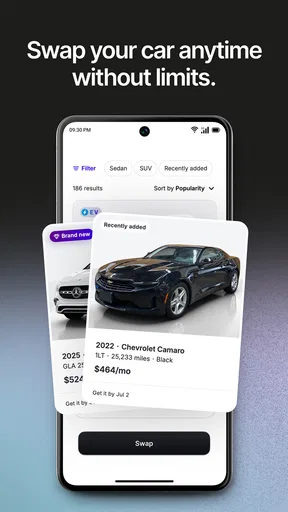
Flexcar is a car subscription service designed for people who want access to a vehicle without committing to a traditional long-term lease or purchasing a car. Through the app, users can browse available vehicles, review subscription details, choose a plan, and manage payments and account information. Availability, pricing, mileage limits, and included services may vary depending on location and vehicle.
What is included in a Flexcar subscription?
A Flexcar subscription generally combines several ownership-related costs into one recurring payment, which may include the vehicle, maintenance, roadside assistance, and other services depending on the selected plan. However, users should carefully review the specific offer before subscribing because taxes, fuel, insurance requirements, delivery charges, mileage overages, deposits, or other fees may not always be included.
Can I cancel or change my Flexcar subscription whenever I want?
Flexcar is designed to offer more flexibility than a conventional lease, but cancellation and plan-change conditions still depend on the subscription agreement. Before confirming a vehicle, check the minimum commitment, notice period, return requirements, early termination charges, and refund policy. The app or customer support should provide the most accurate information for your account and local market.
What documents and requirements are needed to use Flexcar?
Applicants typically need a valid driver’s license, proof of identity, an accepted payment method, and information required for eligibility or insurance verification. Flexcar may also review driving history, age requirements, residency, credit information, or other criteria depending on the region. Requirements can differ, so users should prepare accurate personal details and read the approval conditions before applying.
Is Flexcar available everywhere, and can I use the car outside my area?
Flexcar availability depends heavily on the city, state, or country where the service operates, as well as the vehicle inventory at the time of booking. A car may be available in one location but not another, and delivery or pickup options can vary. Before downloading or subscribing, confirm that Flexcar serves your area and review any restrictions on travel, mileage, parking, or crossing regional borders.
